Do Cats Like Donut Beds Better Than Flat Beds? The Complete Guide
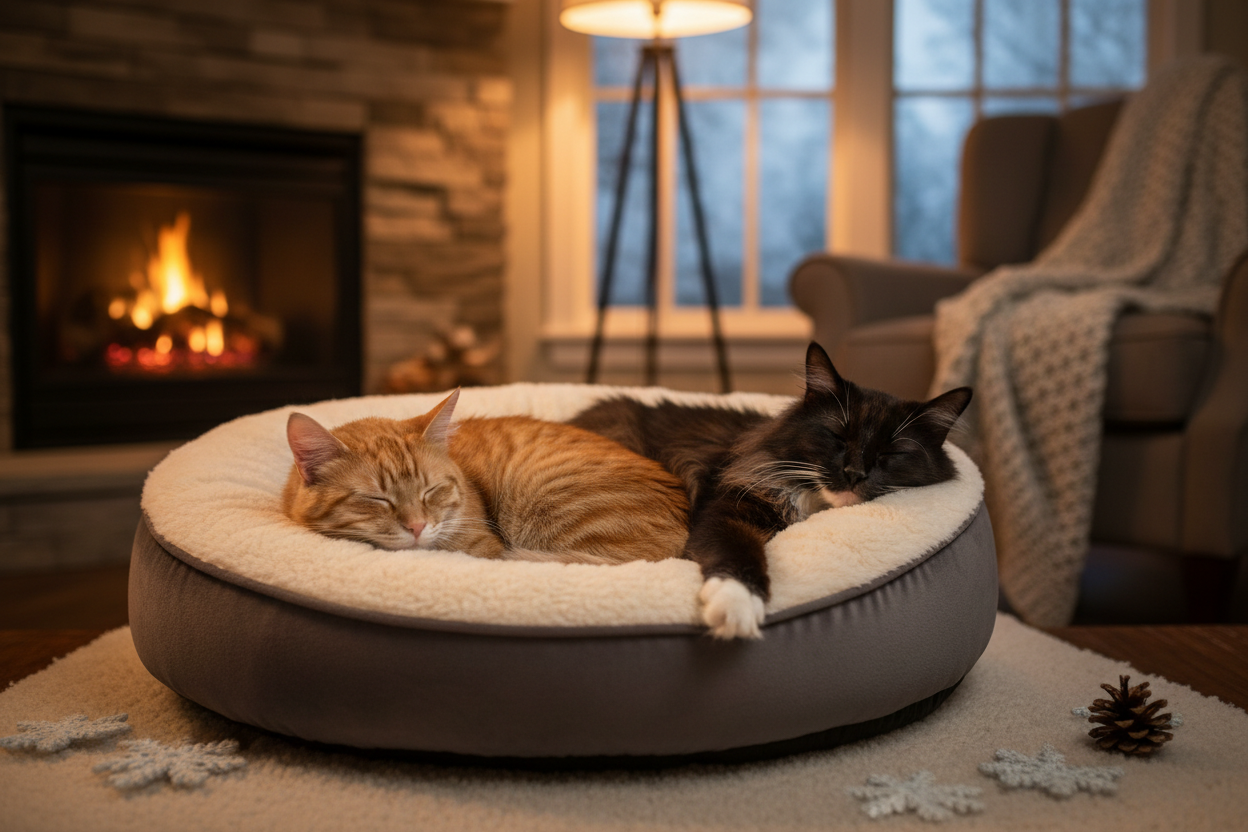
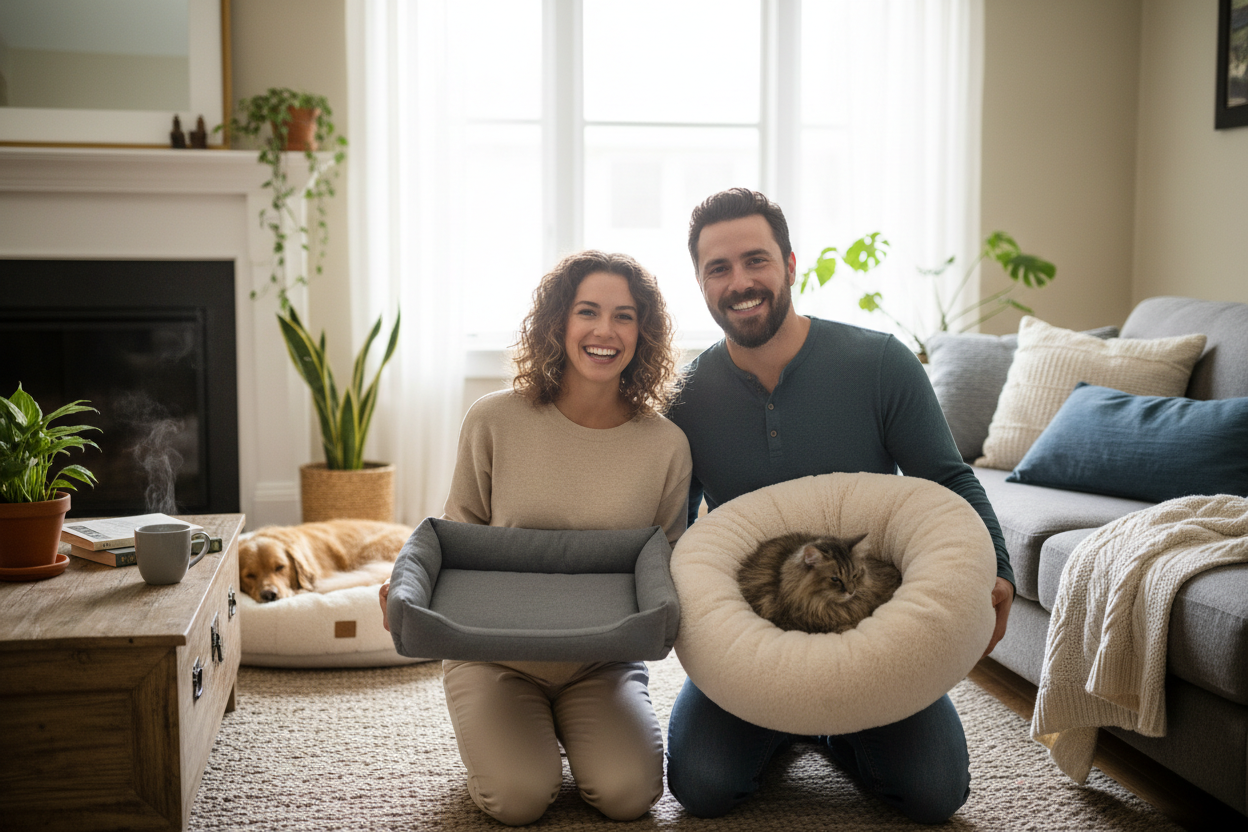
Do cats like donut beds better than flat beds? Many cats do, especially cats that curl up, knead before settling, or like to sleep with their backs supported. A round donut bed can create a soft, enclosed-feeling nest with raised edges, warmth, and a defined place to rest. But a flat bed is often better for cats that stretch out, prefer cooler sleeping surfaces, or need easy access because of age or limited mobility.
The honest answer is that cats have individual preferences. The best bed is the one your cat chooses consistently, feels comfortable entering and leaving, and can use safely in the room where they already like to sleep. This guide compares donut beds and flat beds, explains why many cats enjoy round beds, and shows how to make either option more appealing.
Shop the Winter Warm Pet Bed if you are looking for a cozy, electricity-free resting place for your cat.
Why do cats like donut beds?
Donut beds are designed with a cushioned center and a raised, rounded edge. That shape matches several natural feline sleeping habits. Cats often curl into a compact position, tuck their paws underneath, and press against a soft surface while resting. A circular bed gives them a boundary to lean into from multiple directions instead of leaving them exposed on a completely open mat.
The raised edge can also provide gentle head and neck support. Some cats like to rest their chin on a bolster while watching the room. Others use the edge as a barrier that makes the bed feel more like a personal territory. This does not mean every cat will prefer a donut bed, but it explains why round beds are such a reliable favorite for many curlers and nesters.
1. A secure, nest-like shape
A flat bed gives a cat a soft surface, but it does not create much of a boundary. A donut bed defines the resting area. For cats that seek corners, baskets, blankets, or the space beside a cushion, that extra structure can make the bed feel more secure.
2. Support for curling and compact sleep
Cats frequently change positions during the day, but many of their deepest naps happen while curled. A round bed supports that posture naturally. The cat can turn in a circle, settle in the center, and keep its body close to the soft bolstered edge.
3. Warmth without electricity
Plush materials and a cushioned base can help a cat feel warmer than a bare floor or thin mat. A self-warming bed works by helping retain some of the cat’s own body warmth rather than relying on an electrical heating element. That can be useful in cool rooms, near drafty windows, or during winter travel, provided the bed remains dry and the cat can leave it whenever they want.
4. A satisfying place to knead
Kneading is common before rest. A thick, soft surface may give a cat a comfortable place to paw and turn before lying down. If your cat kneads a donut bed and then relaxes, that is usually a sign that the texture and shape are working for them.
For more on this behavior, read why pets dig in round fur beds. Digging, circling, and kneading can all be part of a cat’s settling routine.
Donut bed versus flat bed: a quick comparison
| Feature | Donut bed | Flat bed |
|---|---|---|
| Best sleeping style | Curling, nesting, leaning | Stretching, sprawling, changing positions |
| Sense of enclosure | Raised edge creates a defined nest | Open and unobstructed |
| Head support | Bolster can support the chin or neck | Usually requires a separate cushion or blanket |
| Access | Low-entry designs are easiest | Often very easy to step onto |
| Warmth | Plush walls and filling can feel warmer | Thin designs may feel cooler |
| Cleaning | Look for washable covers or a washable construction | Usually simple, depending on filling |
This comparison is a starting point, not a rule. A confident cat may love an open flat mat in summer and a donut bed in winter. Offering both in different locations can reveal what your cat prefers by temperature, time of day, and mood.
When a flat bed may be better for your cat
Flat beds have real advantages. A cat that sleeps fully stretched out may not enjoy a raised rim around its body. Some cats prefer to keep a clear view of the room and may avoid anything that feels too enclosed. A flat bed can also be a better choice for cats with stiff joints or limited mobility if the entry is lower and the surface is stable.
Large cats may need a generously sized flat bed if the available donut beds compress their sleeping area. Likewise, cats that run warm may choose a breathable flat mat during warmer months. If your cat leaves a plush bed to sleep on cool tile, that may be useful information rather than a training problem.
The goal is comfort and choice. Never force a cat into a bed or block access to the spot they have selected. Instead, place the bed near that spot and allow the cat to investigate it at their own pace.
Which cats are most likely to prefer a donut bed?
Although every cat is different, a donut bed is often a strong match for:
- Cats that sleep curled up with their paws tucked under their chest.
- Nesting cats that burrow into blankets, laundry, baskets, or sofa corners.
- Indoor cats that seek warmth near radiators, sunny windows, or family members.
- Shy or easily startled cats that like a defined resting boundary while still having an open view.
- Senior cats that appreciate a cushioned surface and a place to rest their head, provided the edge is easy to step over.
- Small cats and kittens that fit comfortably inside the central sleeping area without being crowded.
For anxious cats, a round bed is not a replacement for veterinary guidance or a calm home routine, but it can become one predictable comfort zone. See our guide to a calming round cat bed with faux fur for more setup ideas.
How to choose the right donut bed size
Measure your cat while they are lying in their favorite sleeping position. For a curled-up cat, measure from nose to the base of the tail, then add room for turning around. For a cat that stretches, measure the full body length and choose a larger design with enough open center space.
The usable center matters more than the outside diameter. A very thick bolster can make the interior feel smaller than expected. Your cat should be able to lie down without their shoulders or hips hanging over the edge, and they should be able to turn around without climbing over the wall.
For cats that share, choose based on the cats’ combined space only if they already sleep together willingly. Otherwise, two smaller beds may reduce competition and give each cat a clear choice.
How to introduce a cat to a donut bed
- Place it where your cat already rests. Familiar surroundings are more persuasive than a bed placed in a random corner.
- Add a familiar scent. A clean blanket your cat already uses can make the new surface feel less strange.
- Leave the bed available. Let your cat sniff, paw, circle, and leave without pressure.
- Reward curiosity, not compliance. A calm voice or small treat near the bed can create a positive association.
- Try a second location. Cats may prefer a sunny spot during the day and a quieter spot at night.
Do not place a cat directly into the bed and hold them there. That can make the bed feel like a trap. Cats are more likely to adopt a new bed when they can inspect it and control the timing.
How to make a donut bed more appealing
Texture is important, but location may matter even more. Put the bed away from loud appliances, busy doorways, and food or litter areas. A cat may prefer a slightly elevated, quiet corner where they can see what is happening without being disturbed.
Keep the bed dry and free from strong cleaning-product odors. Follow the care instructions for washing and drying so the filling retains its shape. If your cat sheds heavily, regular cleaning can keep the bed more inviting. Our guide on washing a round fur pet bed covers practical cleaning steps.
For winter, place the bed away from direct drafts and cold floors. A round self-warming bed can add a cozy layer without cords, but it should never be used as a substitute for veterinary care if your cat is shivering, weak, unusually quiet, or showing other signs of illness. Learn more about how to tell if your cat is cold.
Can a cat like both bed styles?
Absolutely. Cats are not choosing a permanent bed category. They are choosing the most comfortable surface for a particular moment. A flat mat may be ideal for a long stretch after play, while a donut bed may be preferred for a tightly curled nap. A cat may also choose based on sunlight, room temperature, noise, or who is nearby.
Instead of asking which style is universally best, watch what your cat does. Do they settle quickly? Do they stay asleep? Do they return to the bed without being carried there? Do they knead, curl, stretch, or rest their chin on the edge? Those behaviors tell you more than a product label.
Signs your cat likes the donut bed
- Your cat walks over to it without prompting.
- They circle, knead, or groom before settling.
- They sleep in the center or lean comfortably against the bolster.
- They return to the bed across multiple days.
- Their body looks loose and relaxed rather than tense or ready to leave.
If your cat sniffs the bed and walks away, do not assume the shape is wrong immediately. It may need a better location, a familiar scent, or a few days to lose the smell of packaging. If your cat repeatedly avoids it after sensible adjustments, a flat bed may simply be the better match.
Our recommendation: offer comfort, then let your cat decide
For cats that curl, knead, lean, or seek warm soft spaces, a donut bed is often more appealing than a flat bed because it provides both cushioning and a reassuring boundary. For cats that sprawl, run warm, or need very easy access, a flat bed can be the smarter everyday option.
The most useful setup is often a choice: a plush round bed for nesting and warmth, plus a flat mat for stretching and cooling down. Rotate or reposition them as the seasons change. Your cat’s repeated behavior is the best review you can get.
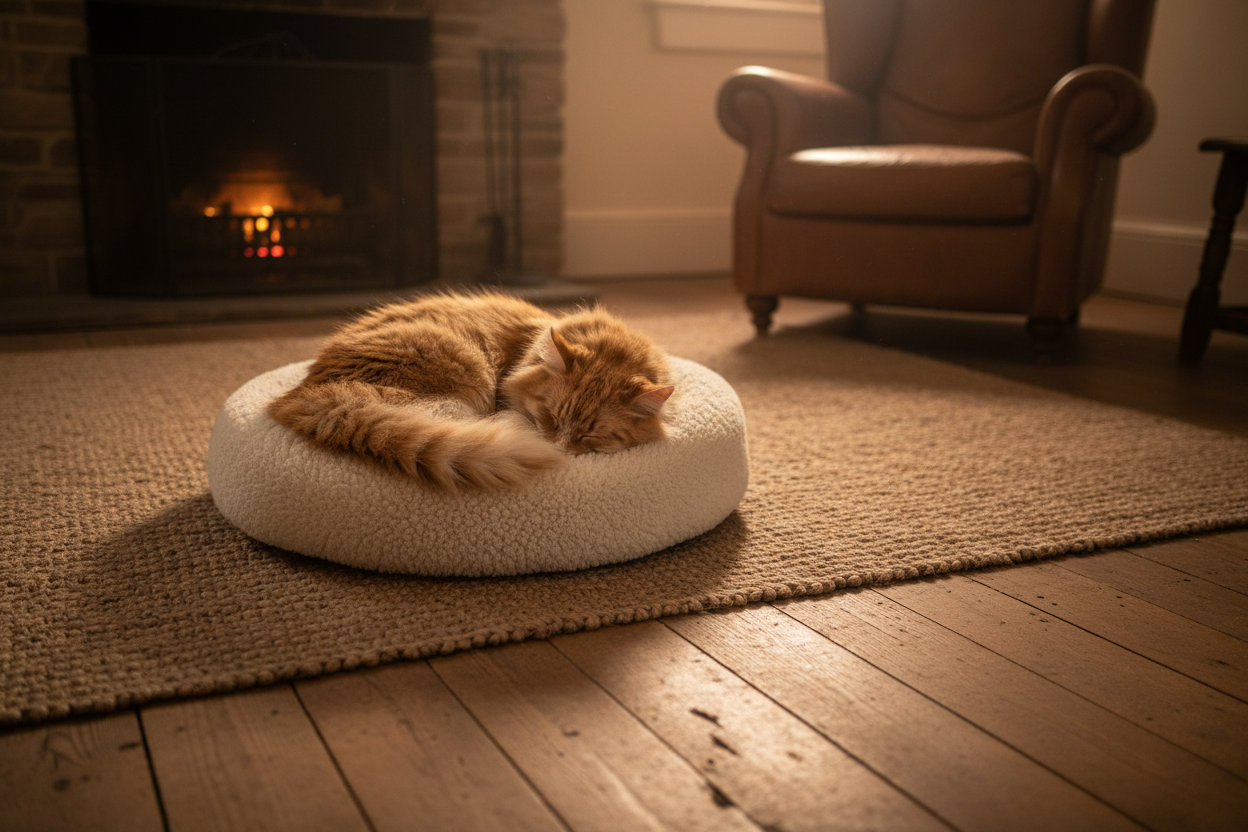
Give your cat a cozy place to curl up with the Winter Warm Pet Bed, designed for comfortable, electricity-free warmth at home or while traveling.
Frequently asked questions
Do cats prefer round beds?
Many cats prefer round beds because they support curling and create a soft boundary. Preference varies, so offer a flat option as well when possible.
Are donut beds good for senior cats?
They can be, especially when the surface is supportive and the entry is low. Choose a size that allows easy turning and watch for any difficulty stepping over the edge.
Why does my cat sleep beside the donut bed instead of inside it?
The location, scent, temperature, or texture may not suit your cat yet. Move it closer to a favorite spot, add a familiar blanket, and give your cat time to investigate.
Are self-warming beds safe for cats?
A non-electric self-warming bed can be a convenient option because it does not require a power cord. Keep it dry, inspect it regularly, and make sure your cat can leave the bed freely. Contact a veterinarian for concerns about a cat that cannot stay warm.
More helpful cat-bed guides
- Why do cats like donut beds?
- Cat beds with raised edges for anxiety
- Non-electric self-heating pet beds
Featured bed ideas
Explore the Winter Warm Pet Bed