

Best Cat Beds for Cats with Arthritis in Winter: Warmth, Support & Easy Entry
Winter is hard on cats with arthritis because cold can make already-stiff joints feel tighter, slower, and less willing to move. A cat that once jumped onto the sofa may begin choosing the floor. A cat that used to curl in a favorite basket may hesitate before stepping over the rim. The changes can be subtle: a longer pause before standing, a new preference for one warm room, or a reluctance to turn around in a bed that used to be comfortable.
The best cat beds for cats with arthritis in winter are warm without overheating, supportive without being hard, and easy to enter and leave. The right bed will not cure arthritis, but it can reduce the effort of resting, protect the body from cold flooring, and give your cat a predictable place to recover between meals, grooming, and normal movement.
This long-form guide explains how arthritis changes sleep, what to look for in a bed, how to choose support and entry height, which shapes suit different cats, where to place the bed, how to introduce it without pressure, and how to keep the setup safe and comfortable through the cold months.

Why arthritis and winter often change a cat’s sleeping habits
Arthritis is not always obvious. Cats are exceptionally good at hiding discomfort, and many do not limp in a dramatic way. Instead, they adjust their routines. They may stop using stairs, avoid high furniture, sleep longer, groom less, or choose a room with more sunlight. Some cats become irritable when touched around the hips, spine, shoulders, or elbows. Others simply stop using a bed that requires too much climbing.
Cold can make these changes more visible. Lower temperatures may increase the sensation of stiffness, while cold floors draw heat away from the body. A cat that sleeps directly on tile or hardwood can spend hours in a position that offers neither warmth nor even support. That is why the surface beneath the bed matters as much as the bed itself.
Winter also changes the household. Heating vents may create hot and dry areas, doors and windows may create drafts, and cats may spend more time indoors and resting. A good arthritis-friendly bed creates a small, predictable zone where the cat can settle without repeatedly climbing, jumping, or stepping over a tall wall.
A bed is only one part of arthritis care. If your cat is moving less, crying when touched, missing the litter box, struggling to groom, or showing a sudden change in behavior, schedule a veterinary assessment. Pain can be managed in several ways, but medication, supplements, weight advice, and exercise plans should come from a veterinarian who knows your cat.
Signs your cat may need a more supportive winter bed
Watch how your cat approaches the current bed. A cat with joint discomfort may stand beside it and look before stepping in, place the front paws inside but leave the back paws on the floor, or circle repeatedly without settling. It may choose a blanket on the floor because the blanket has no edge to cross. These choices are useful information, not stubbornness.
Also watch how your cat gets up. A stiff cat may rock forward several times, push up with the front legs, or pause once standing. A bed that sinks deeply can make rising harder because the cat has to push out of a soft hollow. A bed that is too firm can create pressure points. The goal is even support with enough cushioning to protect elbows, hips, and the spine.
Changes in sleep position matter too. A cat that used to curl may start sleeping stretched out because bending is uncomfortable. Another cat may tuck tightly because it is trying to hold warmth. Some cats press their back against a wall for stability. A bed should accommodate the posture your cat chooses now, not the posture it had years ago.
Look for changes outside the bed as well. Hesitation before stairs, reduced jumping, less grooming around the hindquarters, a shorter play session, or increased time near a heater can all justify a closer look at comfort. Do not punish a cat for avoiding a bed. Treat avoidance as a design review: the entry, support, surface, location, or temperature may be wrong.
The most important bed feature: easy entry
Choose a low front edge
A low front edge is often more important than a tall, cozy rim. A raised back can support the head and protect from a draft, while the front remains low enough for a stiff cat to walk in. Look for a clear opening rather than a bed with the same wall height all the way around.
The opening should be broad enough that your cat does not need to twist sideways or lift one leg unusually high. If the cat approaches from the left, make sure the bed does not require a sharp turn at the threshold. Arthritis can make small awkward movements disproportionately uncomfortable.
Keep the approach stable
A low bed that slides is still difficult to use. Put a non-slip mat under the bed, especially on hardwood, laminate, or tile. The mat should lie flat and extend far enough around the opening that the cat can step onto it before entering. Avoid loose blankets that bunch beneath the front edge.
Think about exit routes
A cat with pain needs confidence that it can leave quickly. Do not push the bed into a tight corner with furniture on three sides. A wall behind the bed can feel secure, but leave the front and at least one side open. Keep cords, baskets, and toys out of the walking route.
Consider the height around the bed
The bed itself may be low, but the route to it can still be difficult. A cat may need to cross a tall threshold, climb a step, or squeeze beneath a table. Create a level path wherever possible. In a multi-level home, place at least one complete rest setup on the floor your cat uses most, rather than expecting repeated stairs.
Support without pressure points
Arthritis-friendly support is not the same as maximum softness. A cat needs cushioning, but a bed that collapses deeply can make turning and standing more difficult. Look for fill that supports the body evenly and returns to shape after use. Memory foam or dense foam can help when it is protected by a soft cover and sized appropriately.
Watch for compression after your cat has used the bed for a few weeks. If the hips rest on the floor of the bed or the center remains permanently flattened, the bed may no longer be doing its job. A replacement insert or a new bed can be more useful than adding loose blankets that create wrinkles and unstable footing.
The surface should feel comfortable but not slippery. Smooth satin-like fabric may be easy to clean, but a cat with weak hind legs may need gentle traction to stand. Very shaggy pile can hide claws and make footing uncertain. A short, dense plush or tightly woven fabric is often a good compromise.
Check the bed when your cat is asleep. Look at whether the spine appears relaxed, whether the legs are forced against a wall, and whether the cat can change position without waking in discomfort. A good bed should support the body without dictating one posture.
Warmth matters, but overheating is not the goal
Cold can make a stiff cat reluctant to move, but too much heat can cause dehydration, discomfort, or an inability to find a cooler place. The best winter setup gives the cat a warm surface and an easy way to leave it. Do not seal the bed against a radiator or cover an active heating element with materials the manufacturer has not approved.
Self-warming beds can be useful because they return some of the cat’s own body heat without a cord or powered element. They still need a stable base, a clean cover, and regular inspection. Make sure the reflective or thermal insert is handled according to its care instructions. Never assume every insert can go in a washing machine.
Heated beds require more supervision. If you use one, choose temperature control, protected wiring, and a design that allows the cat to move off the heated area. Keep the cord away from chewing and keep the control unit visible and accessible to the owner. Our heated cat bed guide covers active warmth and safety checks.
For many indoor cats with arthritis, a non-electric self-warming bed plus a draft-free location is a sensible starting point. If the room is genuinely cold, improve the room and floor insulation before increasing the heat of the bed.

Which bed shape works best for an arthritic cat?
Low-entry orthopedic beds
A low-entry orthopedic bed is a strong default for a cat that needs even support and easy access. Choose a broad surface with a low front opening and a supportive center. The back or side bolster can provide a headrest, but it should not reduce the sleeping area to a narrow strip.
An orthopedic bed works especially well for cats that stretch, sleep on one side, or change positions frequently. It may be less appealing to a cat that needs a strong sense of enclosure. In that case, add a lightweight washable blanket over part of the back edge, but keep the entry and exit clear.
Round beds with a low front
A round bed can still work for arthritis if the cat likes curling and the front rim is easy to cross. Look for a lower opening rather than a tall donut wall. The curved edge can support the back and neck, but the sleeping center should not be so deep that the cat has to climb out of a bowl.
Read our donut cat bed guide for more on rim height and curl-up posture. For an arthritic cat, treat the entry height as the first filter, not an afterthought.
Flat supportive mats
Some cats prefer a flat mat because it requires no stepping over a wall. A mat can be placed near a favorite window, under a desk, beside the sofa, or on top of a low platform. Add a non-slip layer underneath, and avoid placing it directly on cold tile.
Flat mats are also useful as secondary beds. A cat may use a firmer mat during the day and a warmer bolster bed overnight. Offering choice can reduce the pressure to make one bed satisfy every sleeping preference.
Semi-enclosed beds
A semi-enclosed bed can protect an arthritic cat from drafts and create a calm retreat, but it must have a large, low opening. A narrow cave entrance can be difficult for a stiff cat to navigate, especially if the cat has to turn around inside. Choose a design with a removable lining and enough headroom for the cat to change position.
Heated and self-warming pads
A low-profile thermal pad can be useful when a cat refuses bolsters or caves. It keeps the body away from the floor and may fit beneath a desk or beside a sofa. The pad should not slide, bunch, or create a hard edge against the cat’s joints. Use it as one option, not a surface the cat is forced to occupy.
How to choose by joint location and sleeping posture
Hip and hind-leg stiffness
A cat with hip discomfort may avoid high edges, deep beds, and surfaces that require a strong push to stand. Choose a low entry, even support, and a stable base. A broad bed lets the cat extend the hind legs without pressing them against the rim. Place it on the floor level the cat already uses to avoid unnecessary stairs.
Shoulder and elbow discomfort
Shoulder or elbow discomfort can make a cat reluctant to lower the front half of the body into a deep bed. A flat, padded mat or low bolster may be easier. Watch whether the cat repeatedly adjusts its front paws after lying down. That may indicate the surface is uneven or the edge is pressing in the wrong place.
Spinal stiffness
A cat with back stiffness may need a surface that supports the spine without forcing a tight curl. A longer, flatter bed can allow the cat to choose a neutral position. Keep the path to the bed clear, and avoid requiring a jump onto a high sofa or shelf.
General stiffness
When discomfort is not limited to one area, prioritize easy entry, stable footing, even cushioning, and a warm but optional surface. A simple low-entry bed in a familiar room is often more useful than an elaborate bed placed where the cat feels exposed.
Where to place an arthritis-friendly winter bed
Place the bed in a warm room with a clear route, but not directly beside a radiator or heating vent. A sunny corner can be excellent if the cat can move to shade later. Keep the bed away from frequently opened doors and windows that create sudden drafts.
Many cats want to sleep near their people. A bed beside the sofa or near a desk may get more use than a technically warmer bed in an isolated room. Cats with arthritis may also feel vulnerable, so a spot with a wall behind the bed and a view of the household can be more inviting than a hidden corner.
Use rugs and runners to create a safer route across smooth floors. A cat may avoid a warm bed if it must cross slippery flooring to reach it. Flat, secured rugs can reduce slipping and make the whole room easier to navigate.
Keep food, water, and litter practical but separate from the sleeping area. If the cat has to cross a long cold hallway to reach the litter box, consider adding a second box or relocating resources temporarily. Comfort is a household layout problem, not only a bed problem.

How to introduce a new bed without creating stress
Start by putting the new bed beside the current favorite. Do not remove the old bed on the first day. Let your cat sniff, circle, and leave. Cats with arthritis may be cautious because a new surface changes the footing beneath them. A bed that feels unstable can be rejected immediately.
Add a familiar washable blanket, but avoid heavy fragrance. If the cover has a packaging smell, air it out and wash it according to the care label. Keep the opening visible and make sure no furniture blocks the exit.
Reward investigation with calm attention rather than lifting the cat into the bed. A cat that enters independently is more likely to return. If the cat lies on the edge, do not push it toward the center. That behavior may tell you the center is too soft, warm, or enclosed.
Make one change at a time. Do not introduce a new bed, new detergent, new supplement, and new room arrangement on the same day. Slow changes make it easier to identify what your cat accepts.
Daily movement and the bed setup
Rest is important, but complete inactivity can leave joints feeling worse. Follow your veterinarian’s recommendations for gentle movement. Short, calm play sessions may be more suitable than intense jumping. Use toys that encourage walking and turning on a non-slip surface rather than leaping from height.
Place the bed where it supports a comfortable daily rhythm. A cat may rest, get up for water, walk to the litter box, and return to the bed. Keep those routes short and free of clutter. Avoid placing the bed in a location that forces the cat to choose between warmth and access to essential resources.
Do not use the bed as a reason to prevent all movement. A warm bed should be a recovery zone, not a trap. The cat should be able to leave, stretch, groom, and explore according to its ability and veterinary plan.
Cleaning and maintenance for arthritic cats
Arthritic cats may spend more time in one bed, so regular cleaning matters. Shake out loose fur and vacuum the cover and the area underneath. Wash removable covers according to the care label, use a mild detergent appropriate for your household, and avoid strong fragrances that can irritate sensitive cats.
Dry every component completely. A damp cover feels cold and can create an unpleasant sleeping surface. Keep a spare cover or a second low-entry bed available during laundry. If the insert cannot be washed, use a washable barrier and follow the manufacturer’s instructions.
Inspect the bed weekly. Check for flattened fill, exposed seams, torn fabric, peeling non-slip material, and edges that have become hard or uneven. A small defect can become a snag or pressure point when a cat has limited mobility.
Clean the floor and rug beneath the bed too. Fur, dust, litter, and moisture collect at the edges. A clean surrounding area makes it easier for a stiff cat to step in without slipping.
Safety mistakes to avoid
- Using a tall-walled bed that requires a painful step over the front.
- Placing the bed directly against a radiator or heating vent.
- Using loose rugs that bunch under the entry.
- Choosing an extremely soft bed that creates a deep, unstable hollow.
- Adding a heating element without protected wiring or temperature control.
- Forcing the cat into a cave or holding it in a bed.
- Blocking the exit with furniture, storage, or another pet’s supplies.
- Leaving medication, supplements, or topical products within reach.
- Assuming a bed can replace veterinary evaluation for pain.
Quick buying checklist
- Low, broad entry that requires minimal lifting of the legs
- Even cushioning that supports rather than swallows the body
- Insulation from cold flooring
- Non-slip base and a secure approach surface
- Enough width for the cat’s current sleeping posture
- Removable, washable cover
- Clear exit and household visibility
- Optional warmth with no forced heat
- Construction that remains stable after repeated washing
Frequently Asked Questions
What is the best bed for a cat with arthritis?
A low-entry orthopedic-style bed with even support, a stable base, and a washable cover is a strong starting point. The best bed still depends on where the cat hurts, how it sleeps, and whether it prefers an open or enclosed space.
Are high-sided beds bad for arthritic cats?
Not automatically, but a tall front wall can be difficult to cross. A raised back or side bolster may help with support, while one low opening keeps entry and exit manageable.
Is memory foam safe for cats with arthritis?
Supportive foam can be useful when the surface is protected by a comfortable cover and the cat can rise without sinking too deeply. Choose even support and monitor whether the cat can change position easily.
Should an arthritic cat sleep on a heated bed?
A heated bed may help some cats, but it requires supervision, temperature control, protected wiring, and an easy way to move away from the heat. A self-warming bed is often a simpler no-electric starting point.
Does cold weather make cat arthritis worse?
Many owners notice more stiffness or changes in movement during cold weather, but each cat is different. Keep the environment warm and draft-free, and ask a veterinarian about any new or worsening signs.
Can I put an arthritis bed on the sofa?
You can if your cat can reach it safely and the bed cannot slide off. A floor-level option is still important for cats that no longer jump reliably. Use ramps or steps only if they are stable and appropriate for your cat.
How often should I replace an orthopedic cat bed?
Replace it when the support stays compressed, the cover can no longer be cleaned, the base becomes unstable, or the cat’s body contacts the floor. Inspect it regularly rather than waiting for a fixed timeline.
How do I know whether my cat likes the new bed?
Look for voluntary use, relaxed posture, easy rising, and fewer repeated adjustments. A cat that lies beside the bed, uses only the edge, or struggles to leave is giving you useful feedback that the shape or support may need to change.
Related Articles
- Best Orthopedic Cat Beds for Winter: The Complete Joint-Support Guide
- Best Cat Beds for Senior Cats That Get Cold
- Best Cat Beds for Cold Floors: Warmth for Tile & Hardwood Winters
- Best Self-Warming Cat Beds for Winter: The Complete No-Electric Guide
- Best Heated Cat Beds for Winter: The Safe Warmth Guide
- Winter Pet Bed Cleaning: The Complete Cold-Weather Routine
Comfort Is Part of Arthritis Care
A good bed cannot reverse arthritis, but it can remove unnecessary work from every rest period. Give your cat low entry, even support, warmth without forced heat, stable footing, a clear route, and a surface you can keep clean. Then watch how the cat uses the setup and adjust based on real behavior. The right bed is not the one with the most features. It is the one that lets your cat settle, rise, turn, and return with less hesitation.
More From the Winter Warm Pet Bed Collection
 |
Shop the full Winter Warm Pet Bed collection
Picks From Our Friends at RuleNo
Three current RuleNo picks that complement an arthritis-friendly home. Prices were checked live on September 17, 2026 and may change after publication.
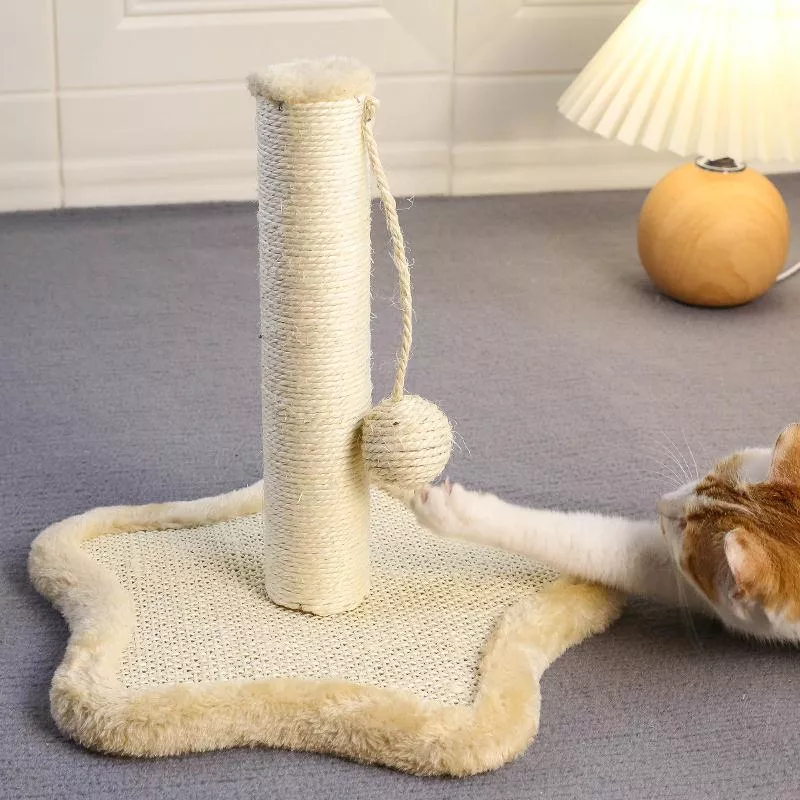 Compact Cat Scratching Post A low-footprint activity option that keeps play near the resting area. US $25.67 US $47.65 |
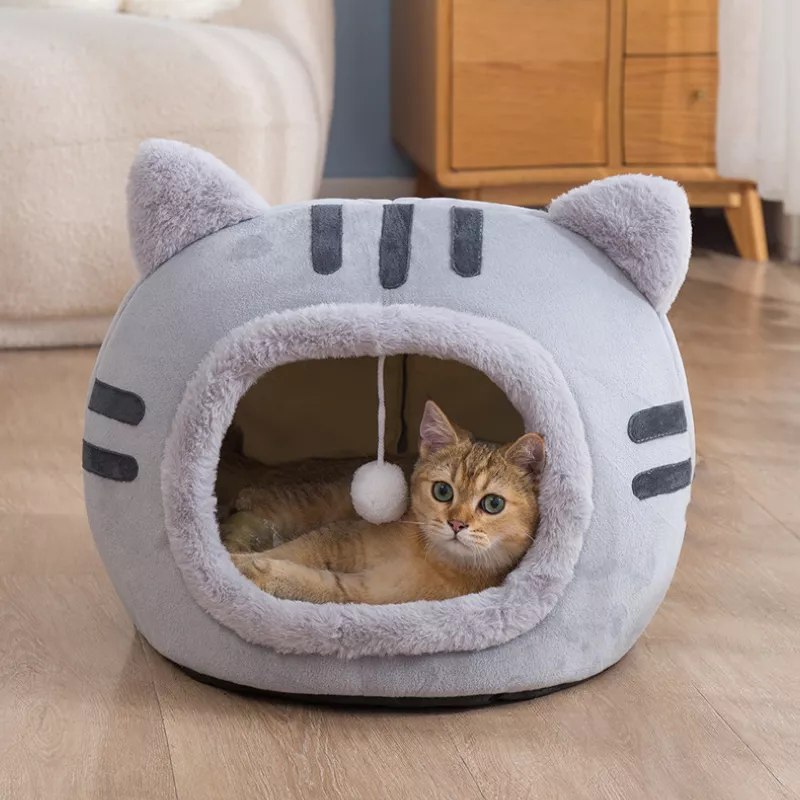 Cozy Cat Bed Cave A draft-protected retreat with an easy-to-monitor opening. US $19.67 US $41.65 |
 Interactive Cat Tumbler Toy A compact enrichment option for gentle, floor-level activity. US $27.82 US $55.33 |

Looking for more premium pet comfort products?
RuleNo | Official Site – Exclusive Deals & Top Quality Products 🛒